
The radio hobby in the Kingdom of Saudi Arabia is old, as it reached the Kingdom through foreign experts who preceded us in this hobby. The first radio amateur started in 1947, the English amateur Kenneth Eles, whose call sign was HZ1KE, the military mission of the British Embassy, and that was the beginning of the spread of the hobby among amateurs in the Kingdom.
According to some records, it was later established in the same year 1947, the Amateur Club of the American Military Training Mission and Aramco Company was established at Dhahran Airport, and the call sign was HZ1AB. In the following year 1948, the first Saudi amateur, Mr. Ahmed Zaidan, an electronics engineer, specialized in wireless communications, and a professional in Morse code signals, which were the only means of sending and receiving telegrams, began working at the Ministry of Communications at that time, working as a telegraph technician (Morse code), Then he held several positions in the Ministry of Communications and later became Undersecretary of the Ministry of Communications for Wired and Wireless Affairs before the Ministry of Post, Telegraph and Telephone was established as an independent ministry. His call sign was HZ1HZ and he still kept the same wireless signal as an amateur and practiced the hobby until he passed away in 2010. Most of his communications were in Morse code, and he participated in international competitions in Morse code.
In about 1955, His Royal Highness Prince Talal bin Abdulaziz Al Saud, the Minister of Communications at the time, learned about the hobby, and his call sign was HZ1TA. He was assisted by the late Professor Ahmed Bukhari (Abu Yousef), as the two used the same signal and were very active in the hobby. However, due to His Highness the Prince’s preoccupation in recent years with the Gulf Children’s Program of the United Nations, his activity on the air decreased. Later, at close times around 1956, a group of the honorable royal family appeared, namely Their Royal Highnesses the princes, including the late Prince Nasser bin Abdulaziz, whose call sign was HZ1NA, assisted by Professor Marzouq Al-Khaled Al-Nasser (who passed away to the mercy of God in the year 1425 AH 2004 AD), then the late His Highness Prince Saad bin Abdulaziz, whose call sign was HZ1SA.
The late His Highness Prince Abdul Mohsen bin Abdulaziz, whose signal is unknown, and Prince Abdullah Al Sudairy, the Emir of Al Qurayyat at that time, whose signal is unknown. In 1960, the writer of these lines, Ahmed Nasser, joined the amateurs where he worked under His Highness Prince Talal bin Abdul Aziz and participated with Ahmed Bukhari in the above-mentioned call sign HZ1TA. Many amateurs emerged after that, including Prince Bandar bin Mohammed (may God have mercy on him), and his call sign HZ1BM. Later in the sixties, His Royal Highness Prince Talal bin Abdulaziz issued three new call signs as follows:
HZ1UN is dedicated to His Highness after he became the UN representative in the Arabian Gulf Children Program.
HZ1TC is in the name of his son, His Highness Prince Alwaleed bin Talal, and was used by Yousef Khalaf, with special permission from His Highness (before the aforementioned left the Kingdom).
HZ1TB is in the name of his son, His Highness Prince Khalid bin Talal, and was used by Raymond Khalifa, the manager of the Intercontinental Hotel in Riyadh, with special permission from His Highness before he left the Kingdom.
At one point Ahmed Nasser used the HZ1TC call sign before it was used by Yousef Khalaf. Around 1965, His Royal Highness Prince Faisal bin Mishaal bin Abdulaziz started using the HZ1SH call sign, this call sign was used by his father, His Royal Highness Prince Mishaal bin Abdulaziz, who was not an amateur but used the devices for hunting trips.
In the early seventies, a signal appeared for a member of the royal family whose name I do not know, and his call sign was 7Z2AP. It was used by a technician affiliated with His Highness, whose name was Alfred Philipos, an Iraqi of American nationality, then news of this call sign was cut off after the aforementioned technician left the Kingdom.
In 1972, His Highness Prince Bandar bin Saud bin Saad left Jeddah with the call sign HZ1AJ. This call sign was used by lawyer Abdullah bin Ali Al-Jahni for about three years, then he stopped. Before stopping, he made a DXPEDITION trip to the Saudi-Iraqi-Kuwaiti neutral zone. This area was known before the division as the call sign 8Z4 before the division between the aforementioned countries. He used the call sign 8Z4AJ, he was the first amateur in the world to revive this call sign in this area, due to his limited time, he spent about one week there. He made numerous contacts with a large number of amateurs in the world, his first contact in the Kingdom of Saudi Arabia was with the writer of these lines, Ahmed Nasser, who was using the call sign HZ1SH.
He also received technical support and encouragement from the late amateur Dr. Salim Al-Rifai OE6EEG, who was Egyptian by origin and Austrian by nationality. Then, after a period of time, a group of Jordanian amateurs also made a similar trip to the neutral zone before it was cancelled by the International Telecommunication Union (ITU). After the division between the aforementioned countries, the call was cancelled by the International Telecommunication Union (ITU).
In approximately 1973, His Royal Highness Prince Mishaal bin Saud bin Abdulaziz, left Jeddah with the call sign HZ1SL and continued for about two or three years, then moved to Riyadh and was not heard on the frequency after that, but he still kept the devices, even though they were old and he did not renew them. In the same year, 1973, the American Ambassador William Porter left with his call sign (7Z1AB), but he did not stay long, as he returned to his country after only about two years. The aforementioned call sign was later used by some American amateurs from the embassy, but one of them misused it by calling Israel, and some amateur listeners in the Kingdom heard him and informed the competent authorities, then the American embassy asked the American amateurs to stop working with it.
In 1980, His Royal Highness Prince Faisal bin Mishaal bin Abdulaziz issued his own call sign, HZ1FM. He obtained a license for it from the Ministry of Post, Telegraph and Telephone, and it was also used by Ahmed Nasser, who worked for His Highness for nearly 20 years. In 1983, amateur Hassan Askar came from the town of Lina in the northern region near Rafha and Hafar Al-Batin. He worked in the emirate in this town and had a device affiliated with the emirate. He was using the call sign HZ1HA, but he had a problem with the security in Arar in the northern region when they discovered that he was using the official device for work. After that, he stopped practicing the hobby forever.
Around the year 1986, a group of listening enthusiasts emerged and later became amateurs. I will mention their signal. Their names are as follows: Abdullah Al-Najem, Mohammed Al-Muhaizaa, Mohammed Al-Saif, Hamad Al-Mufiz. The latter was studying outside the Kingdom and did not advance in his activity in the hobby like the rest. Nothing is known about him after that, and Mohammed Al-Saif did not continue. As for those who continued the hobby, they became well-known amateurs. Their names are as follows: Abdullah Al-Najem, who used the signal 7Z1ZZ, then officially changed it to HZ1DX.
Mohammed Al-Muhaizaa and his call sign HZ1MM, which he still uses after obtaining the license. Mohammed Al-Muhaizaa also had direct contacts with a number of amateurs in the sisterly State of Qatar. He made many visits to the State of Qatar, where his relationship with amateurs in the State of Qatar was strengthened, including Sheikh Mohammed Al Thani and his call sign A71AC. Soon after that, Ibrahim Al-Shaqeer emerged from the Eastern Province and had a call sign 7Z1IS, which he still uses until now, but his activity has decreased after the availability of the Internet.
Mohammed Al-Muhaizaa HZ1MM and Ibrahim Al-Shaqir 7Z1IS were among those invited to the opening of the Amateurs Association in the State of Qatar, they mention that among those they met at the association were Hamad Al-Mannai A71AD, Abu Jamal A71AN and the late Mohammed Al-Asiri A71BH, as for Mohammed Al-Muhaizaa, his activity was focused on HF, SSB and some communications via satellite using 10 meters and he succeeded in that.
He also had many contacts with many amateurs in the world in general and with Arab amateurs in particular, as he used to make trips to visit some Arab amateur brothers, and he really strengthened the relationship between the amateur and his amateur brother as it should be.
In the years from 1990 to 1993, Abdullah Al-Najem and Ibrahim Al-Shaqeer were widely active in data correspondence such as: Packet, Pactor, SSTV & RTTY. Their activity was intense and noticeable, and they had contacts with a large number of amateurs around the world, especially Abdullah Al-Najem.
They became famous all over the world and used to correspond with amateurs with the call confirmation cards known among amateurs because they were the only ones from the Kingdom of Saudi Arabia working on these patterns.
They sent and received many cards from amateurs all over the world (QSL CARDS).
They had many contacts over the four years 1990, 1991, 1992 and 1993. (See the activity of the year 1993)
In 1993, Mr. Yarab Balkhair from Jeddah came on the frequency with the call sign 7Z2YB, but his communications were on the Packet, Packtor, RTTY information transfer system, as well as by communicating on satellite frequencies in the UHF VHF field.
He is still present, but his activity is small due to his many occupations (he retired in 1425 AH 2004 AD), and he devoted himself completely to the hobby, and his signal was changed after obtaining the license, to HZ1YB, and he began to revive his activity in the hobby again and he has noticeable activity, whether on SSB, CW or on DATA via satellite, and he has developed equipment from antennas, computer programs, etc.
Also, around the year 1990, His Highness Prince Mutab Al Faisal Al Farhan from Al Batin in Al Qassim appeared, and his call sign is HZ1MF. He is still active and is very active during hunting days from December to March every year.
A call sign for His Royal Highness Prince Hazlul bin Saud, HZ1HS, was also appeared and is used by one of his companions, Abdulrahman Al Qusaibi, who is more active during hunting days than he is an international hobbyist.
In recent years, i.e. around 1993, 1994, both Abdullah Al-Najem and Ya’rab Al-Khair were enthusiastic and each of them expressed his desire to increase the presence of amateurs and hobbyists in the Kingdom.
They played a tangible role in trying to convince the official authorities to allow amateurs in the Kingdom in an official and organized manner.
Among the results of these movements in this regard was that an invitation was extended to them and a group of those who wished to practice the wireless hobby in the Kingdom by a technical committee in the Shura Council to attend a meeting to discuss with them and to coordinate and organize the hobby in the Kingdom, and to find out the extent of their knowledge of the hobby and its systems. The following names attended the invitation:
Yarab Balkhair (7Z2YB) Hz1YB
Ibrahim Al-Shaqir 7Z1IS
Abdullah Al-Najem 7Z1ZZ
Sulaiman Al-Jedaie 7Z1SJ
Sulaiman Al Hamoud 7Z1SH
This invitation was addressed to them by the Secretary General of the Shura Council, Hamoud bin Abdul Aziz Al-Badr, on 11/2/1421 AH, corresponding to 15/5/2000 AD. The committee discussed the subject with them from an organizational and technical perspective, and the committee’s impression of them was very encouraging, as their comment on the group was that they were in front of amateurs with experience that exceeded that of engineers specializing in the field of wireless communications.
Abdullah Al-Najem is active in another field of hobbies, which is the hobby of light aviation. He studied aviation while studying electrical engineering in the United States and obtained a certificate in aviation at that time. He also has a hobby that he still practices in aviation, which is the hobby of flying by remote control, for very small model aircraft that fly with mechanical engines that operate on aviation fuel for regular aviation, but they operate with a wireless control device for short distances not exceeding 500 to 600 meters.
In 1994, a license was issued to the American amateur Mike Manfo, whose call sign was 7Z5OO, as he worked as an English language teacher for a member of the royal family. He obtained his license on October 11, 1994 and continued until November 8, 1997, when he left the Kingdom after terminating his contract in the Kingdom. He made 92,000 calls, 96% on CW and the rest SSB. His call sign in America was K3UOC. Also, between 1998 and 2000, Saud Al-Harbi appeared, whose call sign was HZ1SD, but his activity on the frequency was low, because he had another hobby that was the reason for his discovery of the wireless hobby, which is paragliding, which he practices in the suburbs of Riyadh and Qassim, and he manufactures and assembles this type of paragliders.
At approximately the same time, after Saud Al-Harbi, brother Mohammed Al-Diqani HZ1MD came out. He had started his hobby activity in the field of VHF frequencies, then expanded to the HF field when he mixed with the amateurs who preceded him in the high HF frequencies. Later, he had great activity in all amateur frequencies, especially on 6 meters, where he had noticeable activity and extensive contacts with the world of radio amateurs all over the world. He also had experiences in making directed antennas, and he made his own antenna on a 6-meter wave.
As I mentioned at the beginning of the topic, Mr. Marzouq Al-Khaled (Abu Adel, who passed away in 1425 AH 2004 AD, may God have mercy on him) passed away after taking the first test that was held for the first group of amateurs and before he obtained a permit for the wireless hobby. He was one of the old amateurs, as mentioned above, when he was helping the late Prince Nasser bin Abdulaziz in the fifties, then he stopped the hobby for a long period, but he returned to the hobby again and had a call sign HZ1MZ. He was present on the frequency and with light activity before God took him to His mercy.
The amateur Suleiman Al-Judaie (Abu Saad) from the city of Thadiq (150 km northwest of Riyadh) and his signal 7Z1SJ, who was very active on frequencies and in manufacturing directed antennas, whether on high frequency HF or very high frequency, VHF, also appeared. Brother Suleiman Al-Judaie was previously a CB amateur and was very active on this private channel.
Recently, in the year 2002, a new amateur appeared, unknown at that time, who uses transmission and reception on a Data system such as RTTY, Packtor and Packet, SSTV, and uses the call sign HZ1JR. He uses SSTV (Still Picture Exchange). Later, we learned that he is our brother Mohammed Al-Shamlan, and he has contacts with a number of amateurs in this field from the city of Al-Kharj (70 km south of Riyadh). Later, he obtained an official call sign HZ1AC. I also heard about an amateur from the Riyadh region who uses the RTTY system, but I did not hear him, and he uses the call sign 7Z1DR.
Sometime during this period in the nineties, Dr. Nader Omar called me by phone from Riyadh and told me that he was in Riyadh and working as a doctor in the National Guard and that he was still new to the amateur system in the Kingdom because he had come from the United States after graduating from medicine and that he had previously done some amateur radio projects when he was in America, such as making his own transmitter before coming to the Kingdom and that he had inclinations towards the hobby and since the field of licensing was still closed in the Kingdom, I advised him first to contact the brothers in Riyadh, namely Suleiman Al-Judaie 7Z1SJ, Abdullah Al-Najem HZ1DX, Al-Muhaizea HZ1MM and Saud Al-Harbi and to be in constant contact with them.
Then I advised him, on his first vacation to Sudan, to contact Dr. Sayed Ahmed ST2SA, and there he would get immediate assistance to obtain a license from Sudan first. And indeed, that happened, and he got a call sign from Sudan ST2NH before any progress was made regarding the amateur license in the Kingdom of Saudi Arabia. Dr. Nader had prepared a book on electronic engineering, especially for beginner radio amateurs. After the idea of licenses in the Kingdom surfaced, Dr. Nader presented his book in Arabic as a free gift from him to Arab radio amateurs. This book had great merit for many amateurs in the Kingdom in particular and in the Arab world in general. Dr. Nader later obtained an amateur license in the Kingdom, which is HZ1NH.
In 2004, after obtaining the license, I contacted brother Samir Khayat, who currently resides in the Kingdom of Saudi Arabia, because I know that he is an amateur from Lebanon, and I had previous contact with him. Before he obtained the license, I told him about the hobby and that it had opened wide, and I told him to catch up quickly, and I advised him to enter the next test. His fate was that he was in the batch that brother Ya’rab Bil-Khair HZ1YB was in, and he obtained the license with the reference HZ1SK.
Brother Samir Khayyat suggested creating a forum for Arab radio amateurs, and he prepared (Arab Radio Amateurs Forum www.laselki.net), this edifice that brought us all together with groups of Arab amateurs from all over the Arab world and Arab amateurs in European and American countries. We met in this forum, which was primarily credited to Brother Samir Khayyat, who designed it and paid for it. May Allah reward him with all good. It hosted Dr. Nader’s books and other technical books that benefit radio amateurs, including other books by Brother Qusay Al-Fardhi, an amateur from Iraq, whose signal is YI1QEA, and a book by Engineer Muhammad Abd Al-Rahman Pasha from Egypt, whose signal is SU3MB, and many other topics that interest amateurs in the Arab world, including a series of articles by the amateur brother from Iraq, whose name is Muhammad Kazim, whose signal is YI1MKB.
In the years since 1999, there has been a large number of amateurs who violate the methods of communicating with others, they are many, but fortunately they are amateurs in the VHF field, the fields used in cities or deserts for short distances, and there is no one among them on the high frequencies (HF) with a long range.
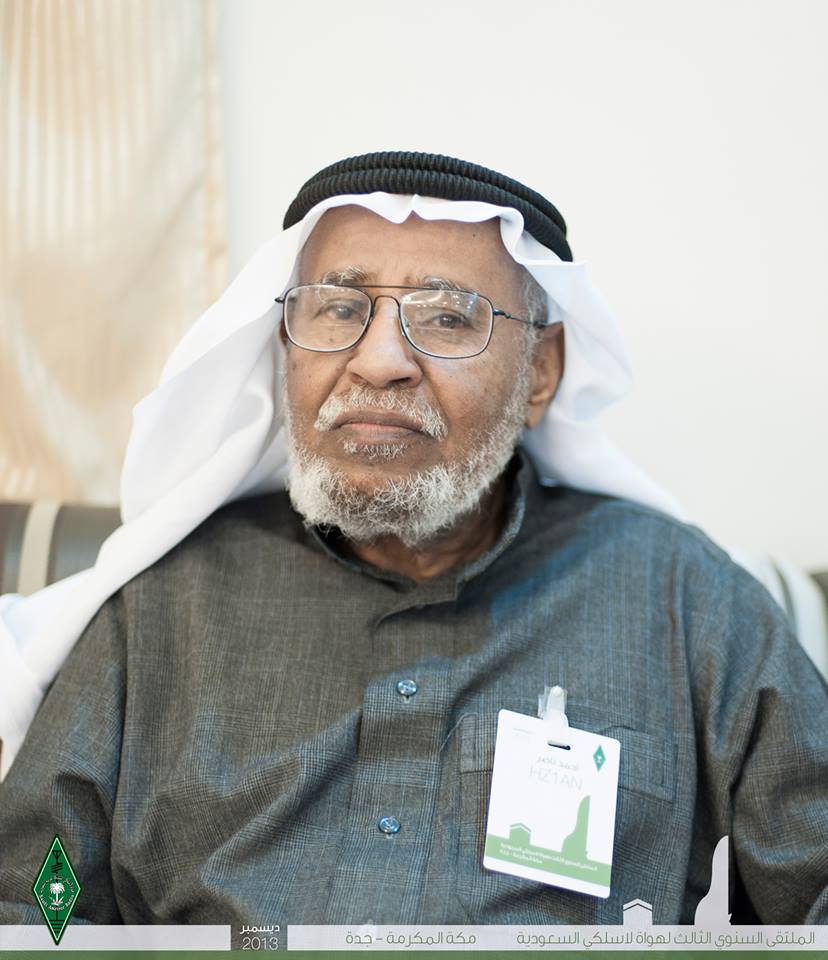
In 1425 AH, 2004 AD, the Communications and Information Technology Commission in the Kingdom of Saudi Arabia completed the development of a system for radio amateurs in the Kingdom. The first amateur test was held on 29/2/1425 AH corresponding to 19/4/2004 AD. After a while, licenses were issued to amateurs who passed the test at that time. The writer of these lines, Ahmed Nasser, was among the group and obtained license number 16, dated 20/4/1425 AH corresponding to 8/6/2004 AD, and its reference is HZ1AN. The second test followed on 7/8/1425 AH corresponding to 22/9/2004 AD, and the third test on 13/2/1426 AH.
Until now, the test is still being held from time to time, approximately twice a year, to open the field for new hobbyists at the headquarters of the Communications and Information Technology Commission in Al-Mursalat district in Riyadh, and the number is large this time, perhaps exceeding one hundred applicants for a hobby license in the Kingdom.
This and with God’s help
The writer of these lines: Ahmed Nasser Al-Mashjari (may God have mercy on him) HZ1AN (SK)
Reference: Arab Radio Forum
 7Z1CQ Abdulhafiz KASHKARI